




Hlas column: Nothing is ever enough for Big Ten, college football

By Mike Hlas
CEDAR RAPIDS, Iowa – Here’s what college football looked like not so long ago.
You played 11 games, maybe 12. If you won enough of them, you went to a bowl game. A handful of them mattered. Most didn’t. The national championship was decided by people sitting in committee rooms, and half the time they got it wrong, and everybody argued about it for years, and it was fantastic.
OK, “fantastic” is a bit of an exaggeration. But it certainly was different than every other college sport
Then we got a two-team playoff, then four, then 12. Now the Big Ten wants 24.
Next stop, everyone gets a trophy and a juice box.
To be fair, the Big Ten’s pitch isn’t entirely crazy. The conference has been pushing what it’s calling — with a straight face, apparently — a “24-team CFP Format Compromise.” The top eight seeds get byes. The other 16 play campus games in early December. Quarterfinals stay at the bowls on New Year’s. Conference championship games go away to make room for all of this.
That last part is actually interesting. Conference championship games in the Big Ten and SEC have become mostly just an injury risk for teams already in the playoff. Eliminating them to create more meaningful playoff games isn’t the worst idea anyone’s ever had. It’s not even the worst idea the Big Ten has had this decade.
But 24 teams?
Hey, the Big Ten isn’t a lone wolf on this. The Big 12 and ACC are for it, too. Understandably so, since had the proposal had been applied to last season, the field would have included seven SEC teams, six from the Big Ten, five from the Big 12, three from the ACC, two Group of Five teams and Notre Dame. Notre Dame, God love it, apparently gets a spot just for existing.
That’s not a playoff. That’s a conference season with better marketing.
Recently, Big Ten Commissioner Tony Petitti said “I don’t get why we can’t have a Minnesota-Iowa game have real impact every so often, like every year actually. Why can’t we do that?”
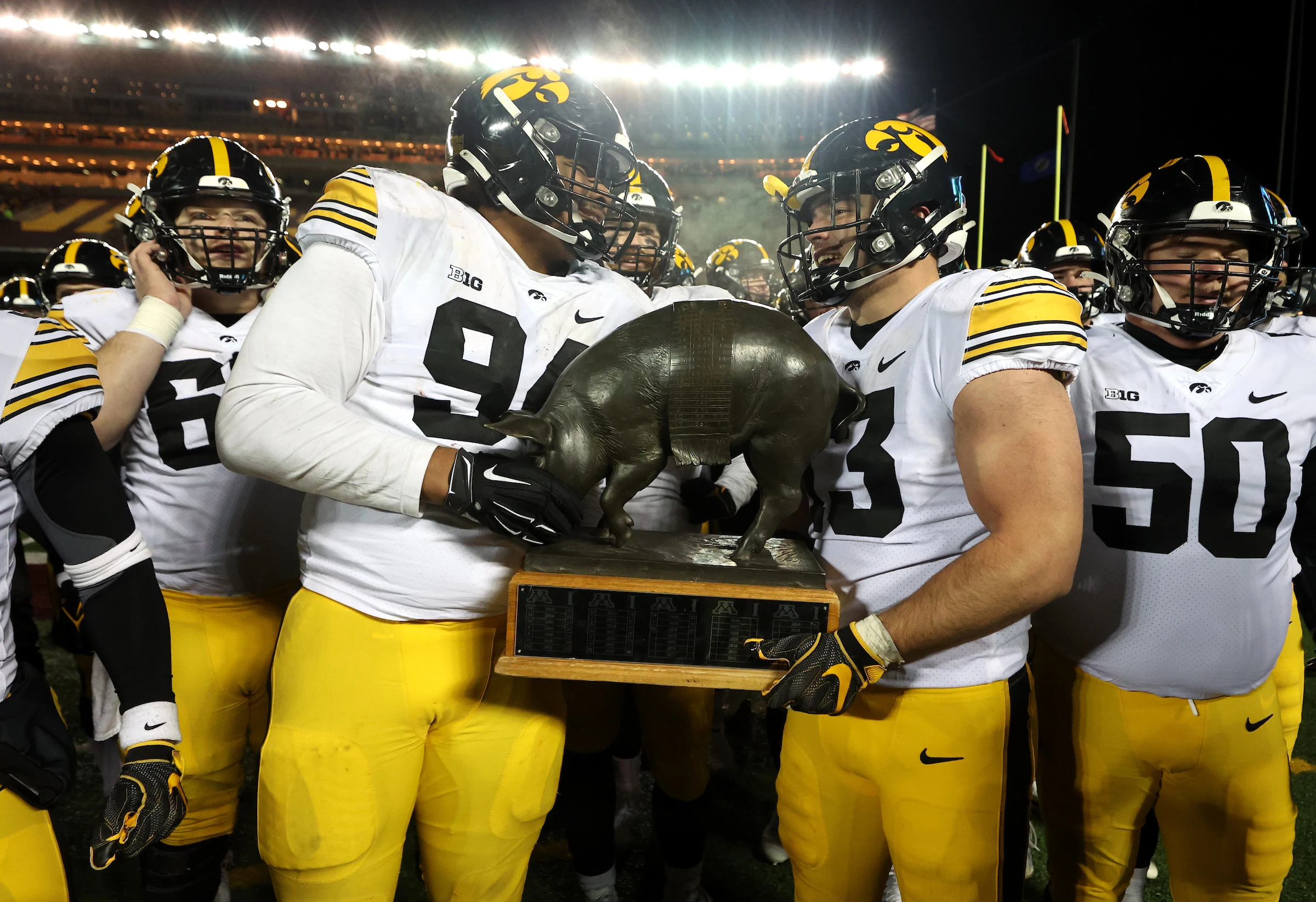
That’s quite a thing to say about one of your league’s big rivalry games. Floyd of Rosedale might as well find a nice quiet farm near the Amanas and never come out again.
College football has become like national politics. There are just two real parties, the Democrats and Republicans. That’s the Big Ten and SEC. I know Big Ten states Indiana, Nebraska, Iowa and Ohio may not appreciate being called Democrats, but the SEC isn’t going to budge on that issue.
The other conferences are the Libertarian Party, the Green Party, and other niche parties like Burning Man and Comic-Con.
The argument for going big is that more teams means more access and the regular season remains meaningful because, the Big Ten insists, only the top 24 teams get in. Big Ten Commissioner Tony Petitti has reportedly been bewildered that he keeps having to explain this to people. There’s a reason he does: It doesn’t make sense.
When 24 of 138 FBS qualify for the postseason, and the top eight of those 24 get a bye, you’re essentially telling half the Power Four that they’re in as long as they don’t lose to Rutgers.
The SEC, to its credit, has been perfectly happy going to 16 teams and stopping there. Everyone else seems to think 16 is a sensible, workable total. Which is why it’s not happening.
Unlike many in my state, I don’t have a cat in this fight. (People always say “a dog in this fight.” It’s discriminatory to cats, though I much prefer a dog. As long as it’s a lover, not a fighter.) I don’t care for the SEC, but I don’t think the Big Ten is higher ground. Both want to be the Amazon or Google of college sports, both are succeeding, and to that I say this:
Go pound sand. Which the Big Ten can now do since it has two members in Los Angeles.
My new favorite conference is the Pacific-12. It’s back, baby! It has eight teams for football later this year. They are Boise State, Colorado State, Fresno State, Oregon State, San Diego State, Texas State, Utah State and Washington State.
Do you see a similarity among the eight? That’s right, all have “State” at the end of their names. A near-similarity: Seven of the eight aren’t on the Pacific Coast. It’s like baseball’s Class AAA Pacific Coast League, which has 10 teams, nine of which are unable to see the ocean from their homes, and many can’t from their time zone.
Here’s what would make some sense in a playoff expansion: Rewarding top seeds with home games. No. 1 Indiana didn’t play at home in last year’s playoff. No. 8 Oklahoma did, and lost, so it didn’t get to play No. 1 Indiana in a quarterfinal in Pasadena.


